
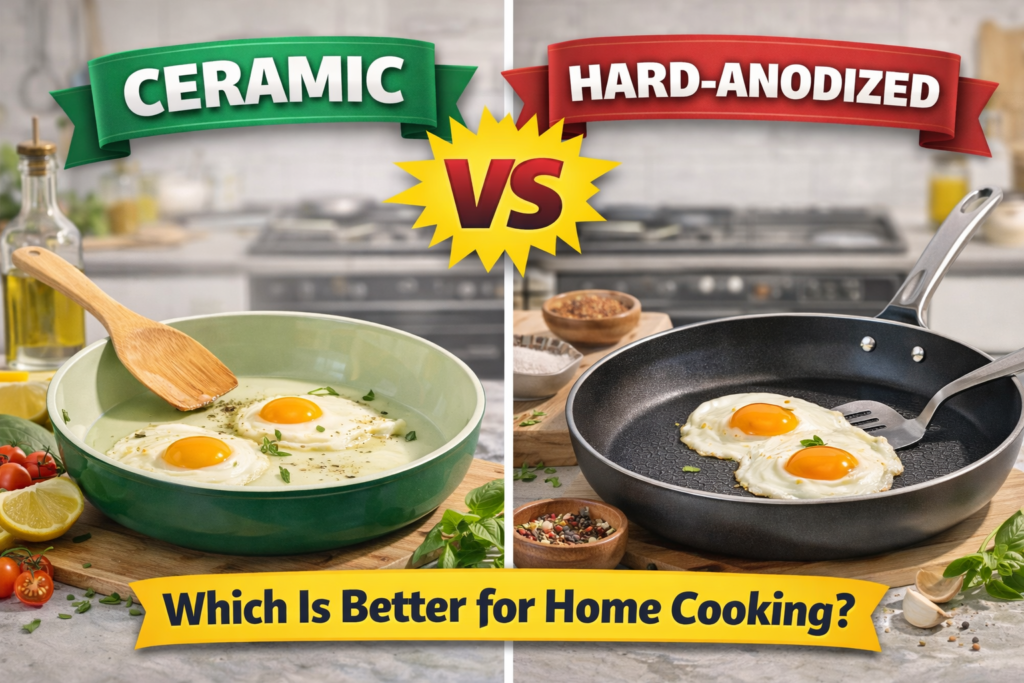
Choosing the right nonstick pan for home cooking can be confusing, especially when deciding between ceramic and hard-anodized options. Both are popular, both claim to be safer and more durable than traditional nonstick cookware, and both are widely used in modern kitchens.
However, these two types of nonstick pans are very different in terms of performance, durability, heat tolerance, and long-term value. In this guide, we’ll break down the key differences between ceramic and hard-anodized nonstick pans to help you decide which one is the better choice for your cooking needs.
Affiliate Disclosure: This post contains affiliate links. If you make a purchase through these links, I may earn a small commission at no extra cost to you.
What Is a Ceramic Nonstick Pan?
A ceramic nonstick pan is coated with a silica-based layer that creates a smooth, nonstick cooking surface. Unlike traditional nonstick coatings, ceramic coatings are typically free from PTFE and PFOA, which makes them a popular choice for people looking for a more eco-friendly and health-conscious option.
Ceramic nonstick pans are known for heating quickly and providing an easy-release surface, especially when new. They are often lighter in weight and ideal for low to medium-heat cooking tasks such as eggs, vegetables, and delicate foods.
Pros of Ceramic Nonstick Pans
Ceramic nonstick pans are often praised for being free from PTFE and PFOA, which appeals to health-conscious cooks. They provide excellent food release when new, require less oil for cooking, and heat up quickly. Ceramic coatings are also easier to clean and are generally considered more environmentally friendly than traditional nonstick options.
Cons of Ceramic Nonstick Pans
One of the main drawbacks of ceramic nonstick pans is durability. Over time, the nonstick coating can wear out faster compared to other types of nonstick cookware, especially if used on high heat or cleaned with abrasive tools. Ceramic pans also tend to lose their nonstick performance after extended use, even with proper care.
What Is a Hard-Anodized Nonstick Pan?
A hard-anodized nonstick pan is made from aluminum that has undergone an electrochemical process to harden the surface. This process makes the pan more durable, resistant to scratches, and less likely to react with acidic foods. The nonstick coating is then applied on top of the hardened aluminum surface.
Hard-anodized nonstick pans are known for their strength, even heat distribution, and long-lasting performance. They are well-suited for everyday cooking and can handle medium to high heat better than ceramic-coated pans.
Pros of Hard-Anodized Nonstick Pans
Hard-anodized nonstick pans are highly durable and designed to withstand regular use over long periods. The hardened aluminum base provides excellent heat distribution, reducing hot spots during cooking. These pans are also more resistant to scratches and warping, making them a reliable option for everyday home cooking.
Cons of Hard-Anodized Nonstick Pans
While hard-anodized nonstick pans are very durable, they are generally heavier than ceramic pans, which may be less comfortable for some users. They also typically cost more and may contain PTFE-based nonstick coatings, which can be a concern for those specifically looking to avoid synthetic nonstick materials.
Ceramic vs Hard-Anodized Nonstick Pans: Key Differences
| Feature | Ceramic Nonstick | Hard-Anodized Nonstick |
|---|---|---|
| Nonstick Coating | Ceramic-based | PTFE-based |
| Durability | Moderate | High |
| Heat Distribution | Good | Excellent |
| Weight | Lightweight | Heavier |
| Scratch Resistance | Moderate | High |
| Safety Concerns | PFAS-free | Depends on coating |
| Best For | Low to medium heat cooking | Everyday, high-use cooking |
Best Nonstick Frying Pans (Ceramic & Hard-Anodized)
Choosing the right nonstick frying pan depends on your cooking style, safety preferences, and how often you cook. Below are some of the best ceramic and hard-anodized nonstick frying pans available, selected based on durability, performance, safety, and overall value.
Cuisinart Chef’s Classic 8-Inch Hard-Anodized Skillet
The Cuisinart Chef’s Classic 8-inch hard-anodized skillet is designed for everyday cooking, offering a durable construction and reliable nonstick performance. Its hard-anodized aluminum body ensures even heat distribution, while the nonstick interior allows for easy food release and quick cleanup.
🔹 Key Features:
- Hard-anodized aluminum construction
- PTFE-based nonstick coating
- Even heat distribution
- Riveted stainless steel handle
- Oven safe up to 500°F
👍 Pros :
- Very durable for daily use
- Excellent heat control
- Easy to clean
- Comfortable handle
👎 Cons :
- Heavier than ceramic pans
- Not PFAS-free

- EXCEPTIONAL DESIGN: Enjoy professional performance with Hard An…
- PREMIUM COOKING: drip-free pouring, sloped sides of skillet max…
- EXCEPTIONAL HANDLING: cool grip handles are solid stainless ste…
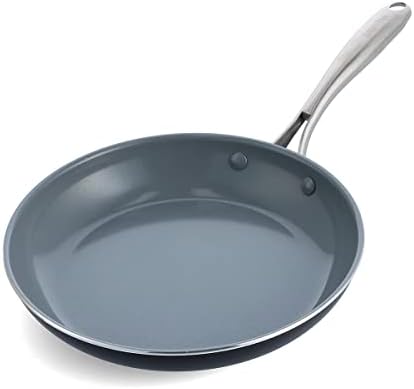
GreenPan Swift Healthy Ceramic 10-Inch Frying Pan
The GreenPan Swift 10-inch ceramic nonstick frying pan is designed for health-conscious cooks who want a safer nonstick option. It features a ceramic-based nonstick coating that is free from PFAS, making it a popular choice for low to medium heat cooking.
🔹 Key Features :
- Ceramic nonstick coating
- PFAS-free surface
- Lightweight aluminum body
- Even heat distribution
- Oven safe up to 600°F
👍 Pros :
- PFAS-free and safer coating
- Lightweight and easy to handle
- Simple to clean
- Suitable for everyday light cooking
👎 Cons :
- Less durable than hard-anodized pans
- Not ideal for high heat cooking
- REINFORCED WITH DIAMONDS: Metal utensil safe, GreenPan’s original dia…
- TOXIN-FREE: GreenPan’s Thermolon healthy ceramic nonstick coating is …
- TOUGH ALUMINUM BODIES: The heavy-duty aluminum construction offers ex…
OXO Enhanced 8-Inch Ceramic Nonstick Frying Pan
The OXO Enhanced 8-inch ceramic nonstick frying pan combines durability with a safer ceramic coating, making it a solid choice for everyday home cooking. Its well-balanced design and comfortable handle make it easy to use for a variety of cooking tasks.
🔹 Key Features :
- Ceramic nonstick coating
- PFAS-free surface
- Hard-anodized aluminum body
- Scratch-resistant interior
- Dishwasher safe
👍 Pros :
- Durable ceramic coating
- Comfortable, non-slip handle
- Easy food release
- Good balance and control
👎 Cons :
- Smaller size (8-inch)
- Higher price compared to basic ceramic pans

- TOP-RATED NONSTICK: Cook’s Illustrated’s highest-rated nonstick skillet for supe…
- DIAMOND-REINFORCED CERAMIC: Premium ceramic nonstick coating enhanced with diamo…
- TOXIN-FREE COOKING: Free of PFAS, PFOA, lead, and cadmium for healthier meals an…
Final Verdict: Which Nonstick Frying Pan Should You Choose?
Choosing the best nonstick frying pan depends on your cooking habits and personal preferences.
If durability and long-term performance are your top priorities, the Cuisinart Chef’s Classic Hard-Anodized Skillet is an excellent option for everyday cooking.
For those looking for a safer, PFAS-free alternative, the GreenPan Swift Ceramic Frying Pan offers a healthier nonstick surface suitable for light to medium heat cooking.
The OXO Enhanced Ceramic Frying Pan strikes a good balance between durability and safety, making it a solid choice for home cooks who want comfort and reliable performance.